
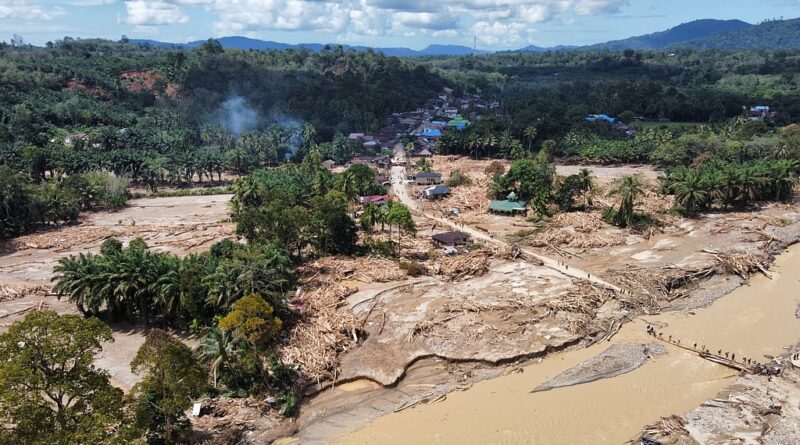
More severe than 2004 tsunami’: Indonesia bucks pressure to label floods national disaster
The country has only made the declaration three times in recent memory: for a 1992 earthquake and tsunami, the 2004 tsunami that killed tens of thousands, and during the Covid pandemic.
But there are mounting calls to use it again for the flooding and landslides that have killed at least 800 people across three provinces in Sumatra.
Those in favour argue the decision would free up resources and help coordinate the response.
But analysts said the government may fear a declaration could spook investors or suggest it was not up to the task of responding to This disaster’s impact on infrastructure is more severe than the tsunami” of 2004, said Teuku Abdul Khalid, a lawmaker from Aceh, among the worst-affected regions. “From the beginning, I have stated that it should be declared a national disaster.”
Other local lawmakers have also backed the designation, warning they are overwhelmed and the infrastructure damage is complicating relief efforts.President Prabowo Subianto’s government has so far insisted it is already well-equipped to deal with the situation.
And unlike his counterpart in Sri Lanka, which was also ravaged by floods last week, Prabowo has not sought international assistance. In Sri Lanka, however, the entire country has been affected.The president has mobilised extensive aid, the military has deployed a significant amount of defence equipment, and the disaster agency has activated all available resources,” he said.
Finance Minister Purbaya Yudhi Sadewa said the disaster agency had “sufficient” funds, and more would be made available if needed.
Military helicopters and ships have arrived in Sumatra bringing some of the 34,000 tons of rice and 6.8 million litres of cooking oil the government has set prepared for survivors
Pressure has also come from civil society groups, with Amnesty International Indonesia saying the declaration was urgently needed “so that domestic and foreign forces can be mobilised to help the victimsAt a shelter in Nisam in Northern Aceh however, Eli Ani told AFP there was little sign of aid so far.
“No aid has reached our village at all,” said the 46-year-old, whose home is inundated with mud left behind by receding floodwater.
“Residents are surviving by eating bread, drinking water, and eating instant noodles, managing on their own. We haven’t received any assistance from anyone.”
“Even if we try to buy food to survive, there are no supplies… And if available, they are sometimes very expensive,” she added.