
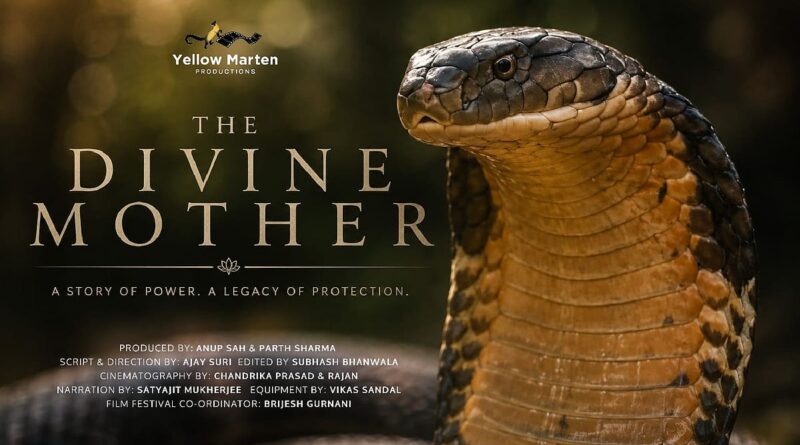
Uttarakhand’s ‘Divine Mother’ King Cobra documentary takes center stage at German film festival
DEHRADUN: In a landmark achievement for Indian wildlife cinema, a documentary capturing the majestic existence of the King Cobra in Uttarakhand has secured an official selection at the globally acclaimed “Green Screen” International Film Festival in Germany.
Titled “The Divine Mother,” the film is set to screen from September 9 to 13, this year, putting the biodiversity of the Himalayan state on the world map.
Produced by renowned wildlife photographer and Padma Shri awardee Anup Sah, alongside conservationist Parth Sharmadirected by filmmaker Ajay Suri, the project is the result of 18 months of rigorous field work.
“The film has been shot entirely across several regions of Kumaon and Garhwal under extremely tough and challenging conditions,” Anup Sah told TNIE.The film notably captures the extraordinary nesting behavior of the female King Cobra—a display of maternal sacrifice that is rare in the animal kingdom and virtually unmatched by any other snake species.The documentary is expected to catalyze global interest in the rich, yet vulnerable, biodiversity of Uttarakhand, underscoring the urgent need to preserve its forests.
The film’s reach extends beyond science, touching upon the deep cultural reverence for the serpent in the region.
Uttarakhand’s Minister for Tourism, Religious affairs and Public Works Department, Satpal Maharaj, lauded the achievement as a defining moment for the state. “
The “Green Screen” festival is widely regarded as one of the world’s premier platforms for
The documentary delves deep into the mysterious world of the King Cobra, an iconic species often misunderstood. It highlights the reptile’s vital ecological role and its unique position in the fragile Himalayan ecosystemmoment for Uttarakhand to have our rich biodiversity showcased on an international platform,” Maharaj remarked. “This film will play a significant role in bringing global attention to the need for conserving our forests and wildlife habitats.”
Wildlife enthusiast and photographer Deepankar Karki highlighted the cultural context that makes this film resonate so deeply with local sentiments. “In both the Garhwal and Kumaon regions, there is