
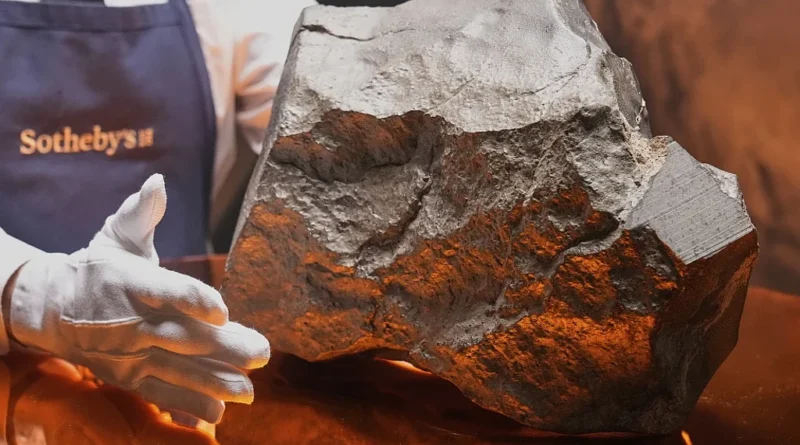
Why Niger is investigating the $5 million sale of the largest Mars rock found on Earth
DAKAR, Senegal: It’s the largest piece of Mars ever found on Earth — a 54-pound (25-kilogram) meteorite that fetched more than $5 million at a New York auction last month, setting a world record.
But in the West African nation of Niger, where the rusty-red rock was unearthed in the Sahara Desert, officials have launched an investigation into what they call possible “illicit international trafficking,” claiming it may have been smuggled out of the country.
Here’s what to know about the meteorite and the legal disputeSotheby’s said the rock, named NWA 16788, was blown off the surface of Mars by a massive asteroid strike and traveled 140 million miles (225 million kilometers) to Earth.
It was discovered in the Sahara in northwestern Niger by a meteorite hunter in November 2023, according to the auction house. His identity was not disclosed. Nor was the identity of the buyer last month.
Meteorite hunting is growing in arid Saharan countries like Niger. Though meteorites can fall anywhere on Earth, the Sahara has become a prime spot for their discovery in part due to the favorable climate for theirAccording to the Heritage academic journal, the rock was sold to an international dealer before it ended up in a private galley in Italy. A team of scientists from the University of Florence examined the rock last year to learn more about its structure and where it came from before falling to Earth, the publicationNiger’s government announced an investigation last month to determine the circumstances of the meteorite’s discovery and sale, saying in a statement it was “akin to illicit international trafficking.”
Last week, President Abdourahamane Tiani suspended the export of “precious stones, semiprecious stones and meteorites nationwide” in an effort to ensure their traceability.Patty Gerstenblith, a cultural heritage lawyer and expert on illicit trade, said that under the UNESCO convention on cultural property — which Niger and the U.S. have ratified — rare minerals, like meteorites, can qualify as cultural property.
However, Gerstenblith said Niger needs to be able to prove it owned the meteorite and that it was stolen.
“If the meteorite was not stolen and if it was properly declared upon import into the U.S., then it would not seem that Niger can recover the meteorite,” she told the AP.
Sotheby’s said in a statement sent to The Associated Press that the meteorite was exported from Niger and transported in line with all relevant international procedu