
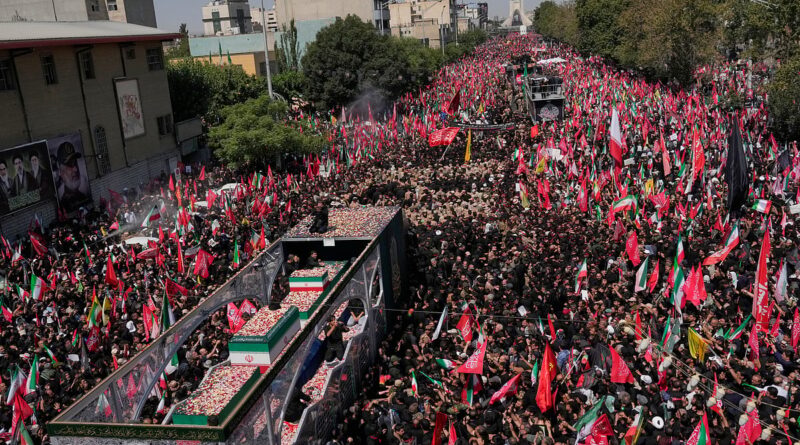
A bitterly divided Iran grapples with Khamenei’s legacy as he is laid to rest
CAIRO: He is the grandson of an influential Shiite cleric, born in Qom — the heart of religious studies in Iran — and raised in a traditional family that embraced theocracy. But by his late 20s, he had stopped praying and given up on clerical rule. Now, he can barely discuss politics or religion with his siblings and father.
The tech worker, now in his mid-30s, says Iranian society is deeply divided, even among opponents of the Islamic Republic, and he blames one maAyatollah Ali Khamenei. The supreme leader who ruled Iran for over three decades will be laid to rest Thursday after being killed at the start of the war.
Processions of his coffin in Tehran and other cities brought out gigantic crowds of supporters in a show of strength by the hard-liners at the core of the Islamic Republic, who lionized him as a defender of clerical rule who had stood up to the West and Israel.
But underneath run deep veins of discontent that have grown over decades of bloody repression,international sanctions and economic mismanagement, and have widened since authorities killed thousands of anti-government protesters in January.
“A gap has opened up in homes across the country that is really remarkable,” said the tech worker by phone from Tehran, where he now lives. Like others interviewed by The Associated Press to discuss Khamenei’s rule, he spoke on condition of anonymity out of security fears.
The funeral has brought Iran’s divide into focusKhamenei’s death, in Israeli strikes on Feb. 28, crowned his legacy in the eyes of Iran’s rulers and his supporters, who consider him a martyr. Echoing the slogans of ultra-hardliners who oppose talks with the U.S., some who turned out for the funeral called for U.S. President Donald Trump to be killed in revenge.
“Our goal is to prove to the world that we will not submit to oppression and tyranny, and that we will avenge the blood of our leader,” said Hossein Akbari, a 60-year-old mourner in Tehran.Khamenei took the reins in 1989 after the death of Ayatollah Ruhollah Khomeini, the charismatic ideologue who had led the overthrow of the U.S.-allied shah a decade earlier and inspired a mass following.
Under the banner of resisting the West, Khamenei defied sanctions to build up the country’s nuclear program, its arsenal of missiles and its network of militant allies across the region.There is no reliable polling in Iran, but elections offer a glimpse of public opinion.
Turnout in Iran’s last presidential elections dropped to some of the lowest levels ever, seen as a sign that millions hoping for change saw no use in voting. Still, the hard-line candidate garnered 13.5 million votes, while Pezeshkian, the reformist, received 16.3 million.Repeated eruptions of protests since 2009 were met with bloody crackdowns. January was the deadliest, when security forces killed thousands to crush nationwide demonstrations that started over economic woes and then snowballed into calls for Khamenei’s overthrow.
The sister of a protester who was shot to death on Jan.