
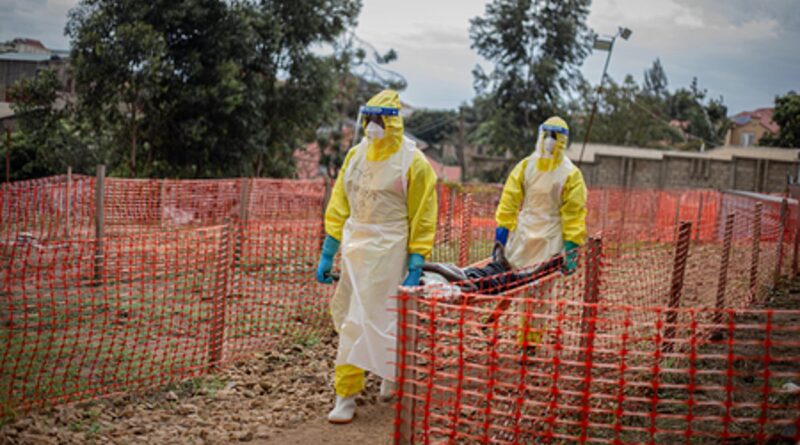
Congo’s Ebola deaths top 5,000 as fear of continent-wide spread mounts
Data from the Congolese Ministry of Health showed that the disease has killed 5,026 people out of 10,351 infected, at a nearly 50% lethality rate. The surge is sparking concerns among experts regarding the authorities’ ability to contain the deadly virus.
The latest outbreak, caused by the Bundibugyo virus, was declared in mid-May, catching authorities by surprise. They have since struggled to manage it.
It is already the second deadliest Ebola outbreak in history, second only to a two-year-long West Africa outbreak between 2014 and 2016, which killed 11,000 people across multiple countries.It is a very tragic milestone because it is just not a number,” said Dr. Patrick Otim, a programme area manager with the World Health Organization. “It is families and communities that have been devastated by this outbreak. The number also shows the severity of this outbreak.”
2,788 people have recovered from the virus so far. The Bundibugyo virus has no known vaccine or treatment, but health workers treat patients based on symptoms.The virus has been concentrated in the eastern region of Congo, especially in Ituri and North Kivu, which have emerged as the epicenters with 9,782 total confirmed cases and 4,792 total deaths.
Authorities are still struggling with tracing contacts and testing, key components in the race to curb the outbreak.
According to the Africa Centers for Disease Control and Prevention, about 80% of new cases are coming from outside the chain of monitored contacts, meaning an overwhelming share of infections are coming from unknown chains of transmission to health authorities.The explosive number of infections in Congo comes on the heels of a long list of issues that have hamstrung efforts to contain the outbreak.
The eastern region of Congo, where the outbreak is concentrated, plays host to a conflict between the government and an array of armed groups, most prominently the Rwanda-backed M23 rebel group, and there is also an Islamist insurgency in the border areas with Uganda, where the Allied Democratic Forces carry out attacks, limiting the reach of healthcare workers.Health workers have gone on multiple strikes, shutting down facilities where they treat infected people, citing long delays in payments by the government.
On Friday, workers at an Ebola treatment center in Tchomia, in Ituri, downed tools, demanding four months of unpaid wages. At the center, there are currently five confirmed Ebola patients and 10 suspected cases under care.
“We are tired of requesting our salaries. If they want to pay us, they will. … Today, being able to feed our families has become a real problem,” Moise Mugenyi, one of the striking workers, told the AP.Similar situations have played out in other health zones like Beni in North Kivu, where services in some treatment centers have ground to a halt. Alain Siwako, an elected public official in Beni, said cases are spiralling in Beni because of a lack of fuel and financial resources from the central government.
“Across Ituri and North Kivu, this outbreak is stretching everyone responding to it, including the communities themselves,” Rose Tchwenko, Country Director for the DRC, Prosper Global (formerly Mercy Corps), said.