
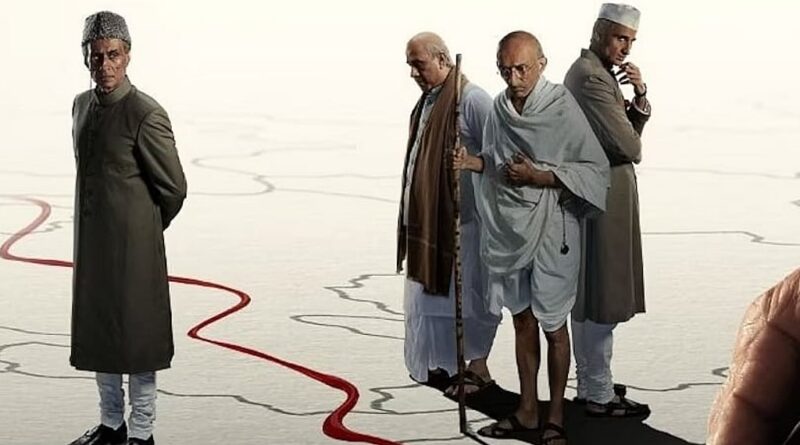
Freedom at Midnight Series Review: A gripping historical-drama that rightly prioritises sentimentality
Covering a span of some of the most crucial months around India’s independence — June 1947 to January 1948 — the second season of Freedom at Midnight largely unfolds from the perspective of Jawaharlal Nehru and Sardar Vallabh Bhai Patel. In that light, it’s very easy to paint Jinnah’s figure as a bitter antagonist. And yet, somewhere in the opening episode, there is a searing moment when Jinnah realises the true cost of fighting for his own nation. It takes him a while to register that moment of his own impending uprootedness. There is a sense of melancholy, as the old man absorbs the shock and the sense of unexpected loss amidst all the gains.In this moment, as in many others, Freedom at Midnight underlines why it is a cut apart from the rest. It knows what it means to humanise characters. It also recognises the difference between humanising and empathising. In these times riddled with polarising views, when it’s easy and much more convenient to go for a black-and-white palette, the series sticks to the grey and its many shades.
Creator and director: Nikkhil Advani
Cast: Sidhant Gupta, Chirag Vohra, Arif Zakaria, Rajendra Chawla, Luke McGibney, Ira Dubey, Rajesh Kumar
Streaming on: SonyLIV
But that’s not all. Freedom Midnight also gets the basics right. There is a clean sense of structure in the seven-episode narrative. The dramatic stakes too only get higher with each successive episode. The dialogue writing is sharp, and succinctly captures the pathos of a nation in turmoil. The use of chapters bewilders you at first, but makes sense when you think of the scale on which Nehru and Patel were operating to get things in order — where barriers often came in a queue, and yet troubles piled up all at once.In one of its most striking accomplishments, the makers succeed in merging documentary footage in a seamless manner. They also make the choice of shooting some of the fictional sequences in a documentary-like style which deftly balances realism and drama. The result is effective — you remain aware of the historical backdrop, while getting immersed in the cinematic value of it all. often driven by ego as much as egalitarianism. They complement each other more often than not — and in their push-and-pull dynamics, we see the nation slowly find its feet. The show also subverts the popular imagery of many of its principal figures. For instance, Mountbatten often comes across more as an overwhelmed bureaucrat, rather than a bull-headed leader, who is struggling to bear the weight of his decisions and legacy.
The volatile relationship between Nehru and Patel (A brilliant Rajendra Chawla) is chalked out to great effect. We find ourselves constantly oscillating between rooting for one and then another. What makes the two powerful men impactful is how they are allowed their share of insecurities and vulnerabilities. There are a few sequences, however, where the series does display a sense of wit and style, prioritising it over a text-driven treatment. The use of basket of apples as a visual device as India negotiates with the princely states is a disarmingly clever sequence. Similarly, the montage built around the border-division sequence is brilliant in its sense of frenzy and uneasiness. This is exactly why the sentimental treatment of these episodes work. When we get the visuals of dead soldiers, as an empowering voiceover captures their bravery plays in the background, what stays with us is sense of loss and brief rather than heroism. It was a matter of great tragedy that while Nehru and Patel were moving mountains to keep the nation together, they couldn’t avoid the eventual ideological rifts between themselves. It’s a melancholic imagery — of a nation trying to stand united despite so many bridges crumbling down. It eventually takes another tragedy for the two warring men to make peace with their differences and march along together. Also, the series feels strangely timely as we frequently see Gandhi take a strong moral stand on political stands, often at the risk of antagonising the most staunch of his devotees. As convenient it might be to villainise the rival, it takes far more courage to embrace empathy against all the naysaying voices.