
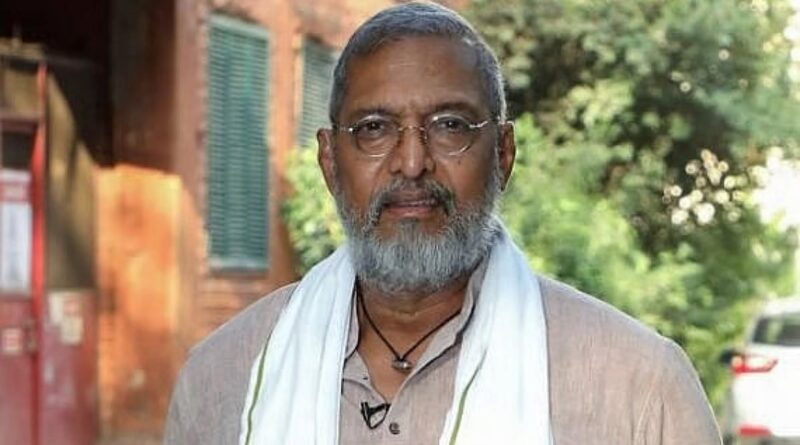
Nana Patekar: Man of contradictions
Nana Patekar was a star sans glamour. If one phrase could capture him succinctly, it’d be “son of the soil”. It didn’t just reflect in his favourite attire of the kurta and the gamcha but also his rootedness in his Marathi identity and culture, his simple one bhk (bedroom-hall-kitchen) life in Mumbai and his love for farming and all things rural towards which he focused most of his philanthropic efforts through the Naam Foundation that he jointly set up in 2015 alongwith actor Makarand Anaspure.His rough around the edges, mercurial, far from glitzy personality found an answering reflection in the volatile, capricious, crusty characters he came to be identified with on screen; most of them, like him, driven by fierceness, fervour and outspokenness and a righteous rage.
He first caught the audience eye with the grounded way he captured the angst of an unemployed wastrel in N Chandra’s Ankush (1986).His popularity among the masses peaked in the zealous patriotism of films Tirangaa (1993) and Krantiveer (1994). His distinctive voice and unmistakable dialogue delivery added to the appeal. In that aspect, he was a true inheritor of the legacy of legendary Hindi film star Raaj Kumar, also known for his declamatory Or the sharp barb, in the same film, on how the politicians continue to enjoy power while common people perish: “Ek ek karke sab marenge! Aur yeh neta log kursi par baithkar maza lenge!”
In Tirangaa he warns the villain that things will come to such a pass for him that a person with a small income will drape him in a cheap shroud: “Pandrah sau ki naukri karne waala, ek din tujhe dedhso ka kafan pehnayega.”The nationalistic sentiment was not just in his speech but also in action, having served in the territorial army and volunteered during the Kargil War. An experience he channeled with finesse in Prahaar (1991), a film that he cowrote and directed along with playing the lead the tough disciplinarian Major VS Chavan.
Often his versatility got bypassed in the hullabaloo over his edginess and the theorization that he kept playing himself, role after role. There have been some distinctly different films and performances which seem to have been disregarded amid the more bombastic ones. His early arthouse tryst, notably in Mira Nair’s There is his bone-chilling breakout performance as the brutal gangster Anna Seth in Vidhu Vinod Chopra’s Parinda (1990) and the gentle sweet show as a philosophical street performer in Aziz Mirza’s Raju Ban Gaya Gentleman (1992), not to forget his hilariously deadpan interpretation of don Uday Shetty in Anees Bazmee’s Welcome (2007).
His Marathi films also demand appreciation. As Bhau Galande in Umesh Kulkarni’s Marathi comedy Deool (2011) he stood out as the voice of rationality in the face of a village blinded by faith.The two unforgettable gems that went against his popular image were Amol Palekar’s charming musical Thodasa Roomani Ho Jaayein (1990) and Gulzar’s Hu Tu Tu (1999). In the former he was the enigmatic Professor Dhrushtadyumna Padmanabh Prajapati Neelkant Dhoomketu Baarishkar who makes you believe in hope and magic. Is he truly a magician or a conman?
In the latter, he is the poet-philosopher, a Dalit street-artiste who sings songs of human rights and social revolution. A performance grounded in the internal than given to external flourishes.